A netback is a way of translating the value of a commodity in one market back to another point in the supply chain. Instead of asking only what the commodity sells for at destination, the calculation works backwards through the costs required to get it there.
The basic idea
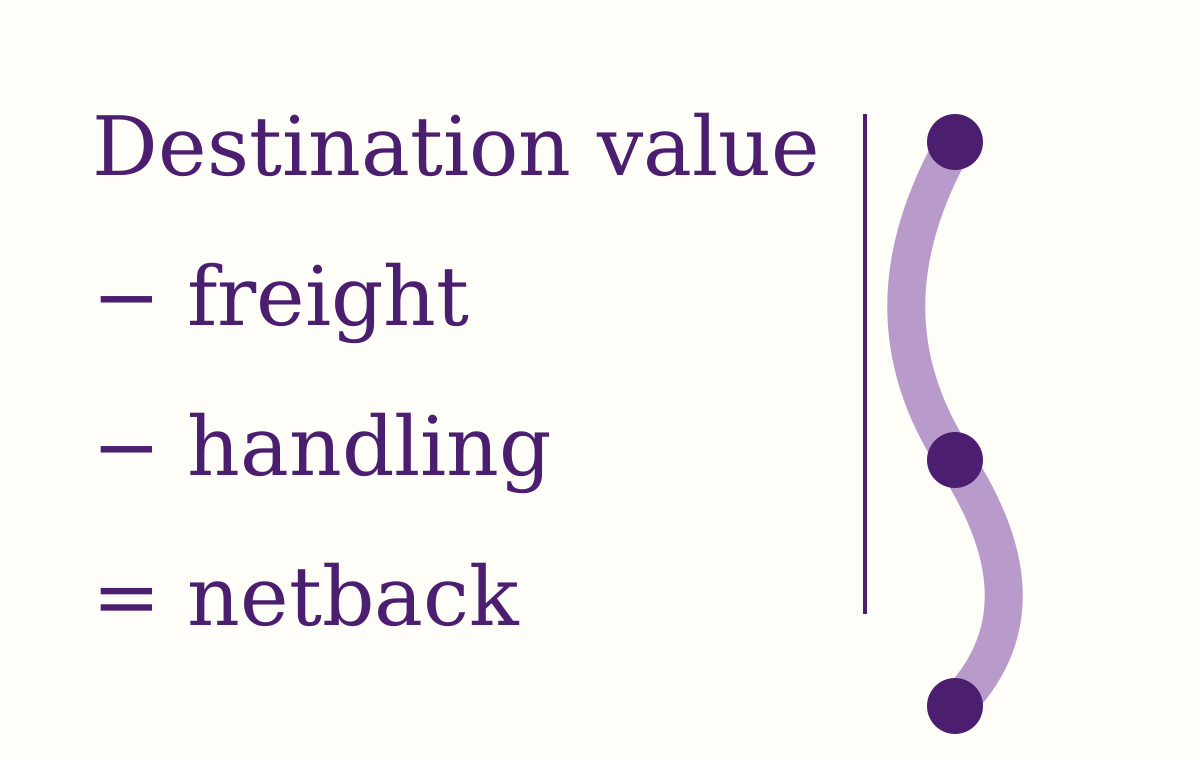
A simplified netback can be written as:
Netback = destination value − freight − handling − other variable trade costs
The exact components depend on the commodity and transaction. The purpose is comparison: after putting different routes or destinations on a common basis, a trader can see which outlet appears to offer the strongest economics.
Why it matters
Suppose two destination markets quote different prices. The higher destination price is not necessarily the better outlet if it requires much more expensive freight or additional handling. Netback analysis makes those alternatives comparable.
The same logic can be used in reverse when assessing how much a buyer can afford to pay at origin while preserving a target delivered cost.
A market, not just a formula
The inputs are dynamic. Freight moves, local premiums change, operational costs shift and timing affects exposure. Netback analysis is therefore less about one permanent number and more about continuously comparing routes as market conditions change.